Workloads that pay a price
for sitting in a remote region.
AI inference is the lead workload, but it isn't the only one. Anything that pays a latency tax, an egress fee, a residency-exposure cost, or a shared-GPU wait time gets cheaper and faster on a distributed hub. Six categories where that bill is highest:
01
AI & LLM inference
7B to 70B production inference. FP4 precision. Single-card 70B models with KV-cache headroom.
02
Healthcare AI
Imaging, pathology, clinical decision support. Data residency. HIPAA-ready posture.
03
IoT & real-time CV
Sensor pipelines, smart-city, property analytics. Sub-10 ms sensor-to-decision targets.
04
Autonomous & robotics
Vehicle and robotics edge inference. Fleet learning, scenario re-sim, V2X supervisor compute.
05
Industrial & IoT
Manufacturing edge, smart-grid, smart-building. Sovereignty over process telemetry.
06
Regulated workloads
Geo-confined deployments. Single-tenant nodes. Audit-ready by design.
Production inference of 7B to 70B-parameter models.
What it is. Real-time inference for production LLM workloads. RAG, agents, copilots, OEM-embedded inference inside SaaS products. The traffic profile is steady, the tokens-per-second target is non-negotiable, and the budget is sensitive to GPU usage above all else.
Why ARO fits. A single Blackwell-class card carries 96 GB of GDDR7 with native FP4 precision. That's enough memory and arithmetic efficiency to host a 70B-parameter model on one GPU with KV-cache headroom for production-realistic concurrency. No model-parallel sharding tax. No two-card minimum. Real cost-per-token efficiency on the right SKU.
What you reserve. Single-tenant nodes in 8, 16, 32, 64, 128, or 256 GPU increments. Multi-year terms with capacity guarantees, not best-effort burst.
Technical fit checklist
- Model class: 7B, 13B, 32B, 70B parameter dense or MoE.
- Precision: FP8 / FP4 inference; BF16 fine-tuning paths.
- Frameworks: TensorRT-LLM, vLLM, SGLang, text-generation-inference.
- Latency target: sub-10 ms tenant-to-hub round trip.
- Workload pattern: steady-state production, not bursty research.
Who buys this
- AI SaaS companies serving inference into customer applications at scale.
- Foundation-model deployers shipping inference inside on-prem or edge appliances.
- Enterprise AI teams running internal copilots with tight latency budgets.
- Smaller GPUaaS resellers needing predictable wholesale capacity.
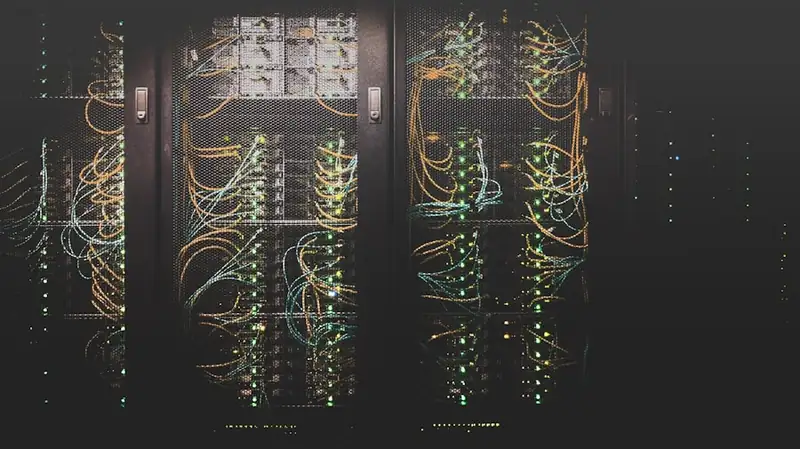
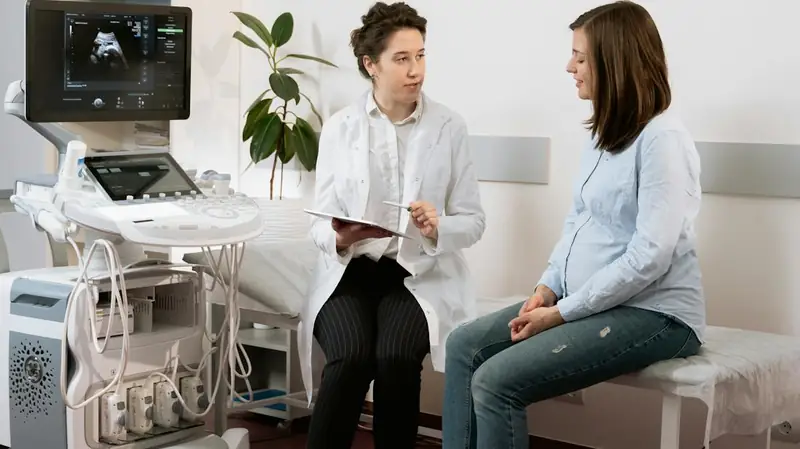
Medical imaging, pathology, clinical decision support.
What it is. Production AI inference in clinical and research healthcare settings. Radiology models flagging abnormalities, digital pathology whole-slide imaging, clinical decision support tooling, and AI-assisted research workflows. Workloads where a few seconds of latency matters and where patient data cannot be trucked to a remote region.
Why ARO fits. Healthcare AI runs on three constraints that hyperscalers handle expensively: data residency, single-tenant isolation, and audit-grade access logs. ARO defaults to all three. Hubs can sit inside or adjacent to the hospital, GPU nodes are dedicated rather than multi-tenant, and access is logged at the tenant boundary.
What you reserve. Single-tenant nodes with HIPAA-ready posture. Business Associate Agreement available. Encryption at rest (AES-256) and in transit (TLS 1.3). Audit logs retained per the BAA.
Technical fit checklist
- VRAM-heavy workloads benefit from 96 GB Blackwell cards or 141 GB H200 nodes.
- Software: NVIDIA MONAI, PyTorch, Kubernetes, containerized inference.
- Compliance posture: HIPAA-ready architecture, with BAA, AES-256 at rest, TLS 1.3 in transit, immutable audit logs.
- Tenant isolation: dedicated nodes, private VLAN handoff, no shared neighbor risk.
Who buys this
- Health systems running their own AI on patient data without sending it to the cloud.
- Medical AI vendors deploying inside customer networks for residency reasons.
- Diagnostic-imaging companies needing low-latency reads close to the modality.
- Genomics and research groups running long-horizon model training on regulated data.
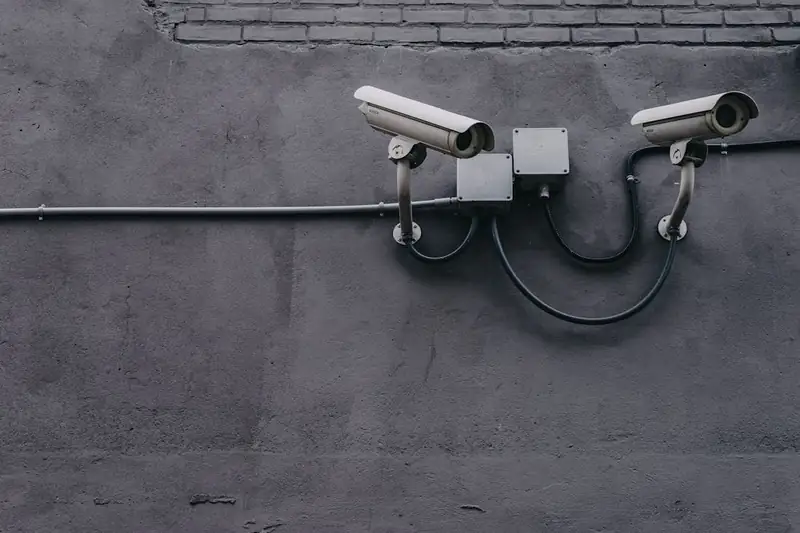
Property-resident vision and IoT pipelines.
What it is. Computer vision, video analytics, and IoT inference running on data that's generated where the hub lives. Hotel guest experience analytics. Retail footfall and queue management. Building-systems anomaly detection. Real-time security and safety video pipelines. The kind of workload that wastes money trucking raw video to a hyperscaler.
Why ARO fits. The cameras and sensors generating the data are physically next to the GPUs processing it. Bandwidth never leaves the property. Egress fees collapse. End-to-end latency drops by an order of magnitude versus a regional cloud. And if the property is the customer of the analytics, the data never has to traverse a third party's network at all.
What you reserve. Capacity sized to the camera count and frame rate, with software-defined tenancy so multiple analytics workloads can run on the same hub without crossing tenant boundaries.
Technical fit checklist
- Workloads: object detection, pose estimation, anomaly detection, OCR, transcription.
- Stack: NVIDIA DeepStream, Triton Inference Server, Kafka, time-series sinks.
- Bandwidth profile: high ingest, low egress; ideal for keeping video local.
- Latency target: hub-resident inference within 50 ms end-to-end at the camera.
Who buys this
- Hospitality and multi-property operators standardizing analytics across a portfolio.
- Retail brands running computer vision for loss prevention and merchandising.
- Smart-building integrators serving energy, occupancy, and HVAC optimization.
- Public-safety and transit operators needing on-premise analytics.
Edge inference for vehicles, drones, and robotics fleets.
What it is. Autonomous systems generate enormous, time-critical sensor data, LiDAR, radar, cameras, IMU, telemetry, that has to be turned into a decision in milliseconds. The on-vehicle compute handles the safety-critical loop. Off-vehicle compute handles fleet learning, scenario re-simulation, behavior-model fine-tuning, and supervisor inference for V2X scenarios. That off-vehicle layer is what tenants reserve from ARO.
Why ARO fits. Distributed hubs put GPU capacity geographically near the operating fleet, so model updates, scenario replays, and supervisor calls don't round-trip to a hyperscaler region. Single-tenant nodes give you the isolation the safety case requires, and the hardware mix supports the heavy training-class workloads autonomous teams run alongside production inference.
What you reserve. Dedicated capacity at a hub geographically close to the fleet, with deterministic bandwidth back to your operations cloud and a fixed cost structure for capacity that is normally bursty and expensive to predict.
Technical fit checklist
- Workloads: scenario re-simulation, behavior-model fine-tuning, fleet-learning aggregation, supervisor inference, V2X edge analytics.
- Hardware: H100 / H200 nodes for training-class loads, Blackwell-class for inference.
- Network: 100 GbE to the hub, deterministic bandwidth profiles, sub-10 ms tenant-to-hub latency targets.
- Isolation: single-tenant nodes, dedicated VLAN, no co-tenant risk on safety-critical paths.
- Geography: pick a hub close to the fleet's operating region.
Who buys this
- Autonomous-vehicle and ADAS teams operating regional fleets.
- Robotics platforms (industrial, logistics, last-mile delivery, agricultural).
- Drone operations and V2X infrastructure providers.
- Fleet operators running supervisor and tele-assist inference at the edge.

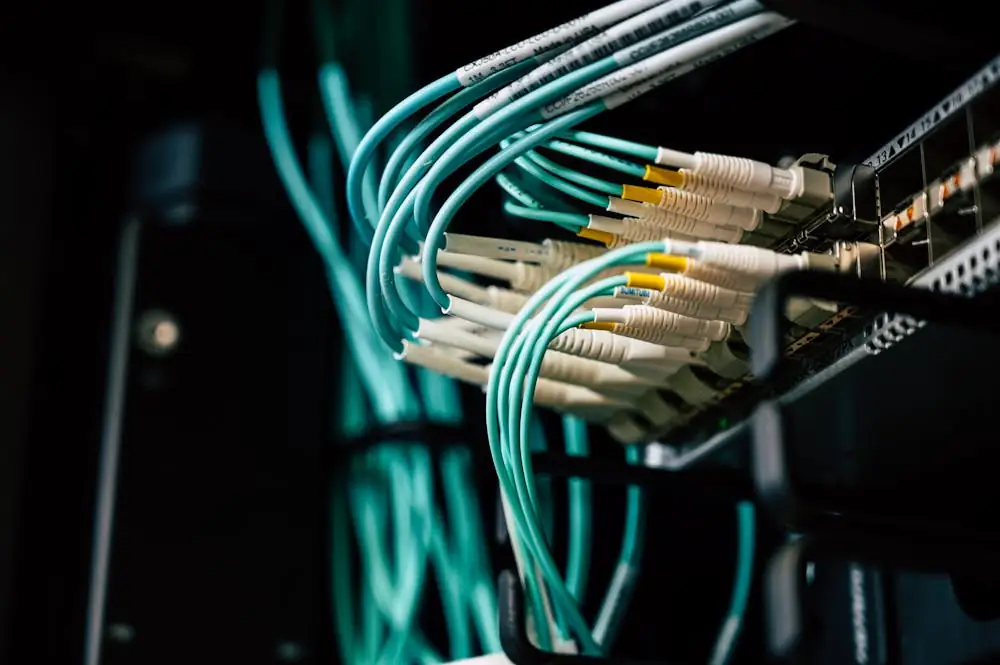
Manufacturing edge, smart-city operations, connected infrastructure.
What it is. Industrial and IoT operations generate sensor and telemetry data continuously from factory floors, smart buildings, smart cities, energy grids, and connected supply chains. Most of that data has time-decaying value, predictive-maintenance signals, defect detections, safety alerts, anomaly traces. Sending it all to a remote hyperscaler is bandwidth-expensive, latency-killing, and a sovereignty risk for operators with proprietary process telemetry.
Why ARO fits. The hub sits inside or adjacent to the operating site. Sensor data lands locally, GPU inference happens on-property, decisions get pushed back to the floor or the field with single-digit-millisecond latency, and only the aggregated insights or alerts travel to the cloud. Operators keep sovereignty over the underlying data and pay for compute as a steady operating cost rather than a hyperscaler bill that scales with sensor count.
What you reserve. Capacity at a hub close to your industrial sites, sized for steady inference throughput with bursting headroom for retraining cycles. Tenant-network handoff at the demarc.
Technical fit checklist
- Workloads: predictive maintenance, defect detection, computer vision QA, anomaly detection, smart-grid optimization, smart-building operations, digital-twin inference.
- Latency: sub-10 ms sensor-to-decision targets supported by on-property hub placement.
- Bandwidth: 100 GbE backhaul, with the option to keep raw sensor data local and forward only aggregates.
- Sovereignty: process telemetry stays inside tenant-defined boundaries.
- Reliability: tenant nodes isolated from co-tenant load; deterministic capacity for safety-relevant inference.
Who buys this
- Manufacturers running quality and maintenance AI on the factory floor.
- Smart-city operators processing camera, traffic, and environmental sensor feeds.
- Energy and utilities running grid-edge analytics and predictive models.
- Connected-building and facilities-management platforms.
- IoT platforms aggregating sensor data across distributed properties.

Data-residency-sensitive enterprise inference.
What it is. Enterprise AI workloads where the regulatory exposure is more expensive than the GPU bill. Financial services. Legal discovery and contract intelligence. Insurance claims modeling. Internal-only enterprise copilots running over confidential corpora. The customer wants AI throughput, but their compliance, legal, or contractual posture won't allow inputs to leave a defined geography or cross a third-party tenant boundary.
Why ARO fits. Single-tenant by default. Geo-confined by design. Identity, access, and audit logging at the tenant boundary, not buried inside a shared cloud account. The same hub-architecture that serves real-time CV serves regulated workloads with stricter access controls layered in.
What you reserve. Capacity at a hub in your tenant region, with tenant-network handoff at the demarc, isolated nodes, encrypted storage, and a documented data-flow that survives diligence.
Technical fit checklist
- Architecture: dedicated nodes, private VLAN, no co-tenant risk.
- Encryption: AES-256 at rest, TLS 1.3 in transit, optional confidential-computing add-ons.
- Access: tenant-controlled IAM, audit logs to the tenant's SIEM.
- Compliance posture: SOC 2 Type I in flight, HIPAA BAA available, ISO 27001 sequenced.
- Residency: capacity in tenant-defined regions; data flows mapped to tenant policy.
Who buys this
- Financial-services AI teams running models over non-public market or customer data.
- Legal-tech companies processing privileged or sensitive matter data.
- Insurance carriers running underwriting and claims inference.
- Government and government-adjacent buyers with FedRAMP-class residency requirements.
Where ARO probably isn't your best move.
Honesty saves everybody time.
Hyperscale model training
Training a foundation model from scratch on tens of thousands of GPUs needs a dedicated hyperscale fabric. CoreWeave, Lambda, and the major clouds are better matches.
Spot-burst research
If your workload is "fire up 200 GPUs for an afternoon, then disappear", an on-demand spot market beats a multi-year reservation. Reserved capacity is for steady-state workloads.
Truly remote regions
Hubs need fiber, power, and a host property with the right footprint. Rural, low-density geographies usually don't qualify, and the latency benefits of edge inference shrink there anyway.
One conversation, a sized recommendation.
Tell us about the workload, the term, and the constraint that's driving you off a hyperscaler. We come back within two business days with a sized configuration and a Letter of Intent if there's a fit.
- Single-tenant by defaultDedicated nodes, no shared-neighbor risk.
- Capacity guaranteesReserve up frontd. No bursting against neighbors.
- Pricing per dealTerm length, GPU SKU, and hub location all move the number.
- 10-year site exclusivityLong-term capacity, not 90-day promises.